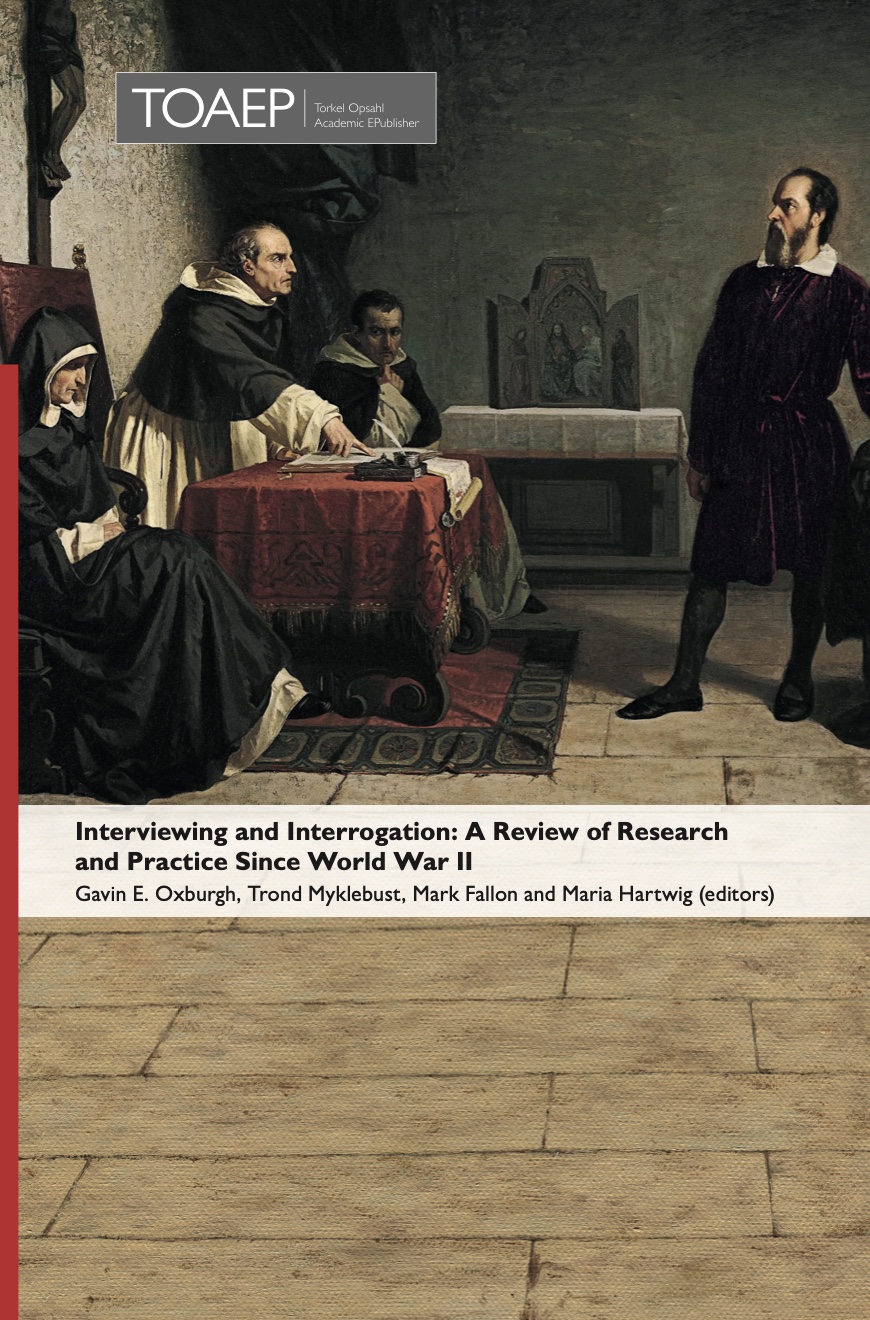
Interviewing and Interrogation: A Review of Research and Practice Since World War II
Gavin E. Oxburgh, Trond Myklebust, Mark Fallon and Maria Hartwig (editors)
Despite significant advances in the science of interviewing and interrogation since the Second World War, coercive and ineffective practices persist worldwide…
Despite significant advances in the science of interviewing and interrogation since the Second World War, coercive and ineffective practices, including torture, persist worldwide, even in jurisdictions committed to the rule of law. This book provides an accessible, evidence-based overview of contemporary non-coercive interviewing methods for professionals across policing, criminal justice, and security contexts, drawing on the expertise of 52 contributors across 24 chapters to examine key models, techniques, and their application across diverse legal and socio-political settings.
Quality Control in Criminal Investigation
Xabier Agirre, Morten Bergsmo, Simon De Smet and Carsten Stahn (editors)
This book examines how the investigation and preparation of fact-rich cases can be strengthened across national and international jurisdictions…
This book examines how the investigation and preparation of fact-rich cases can be strengthened across national and international jurisdictions, addressing evidence and analysis, systemic challenges, investigation planning, and the roles of judges and prosecutors. Drawing on contributions from leading international experts, it is the principal outcome of CILRAP’s Quality Control Project and builds on earlier volumes, with a strong focus on improving quality across documentation, preliminary examination, and investigation through both individual practice and institutional culture.